Research compound · Checked
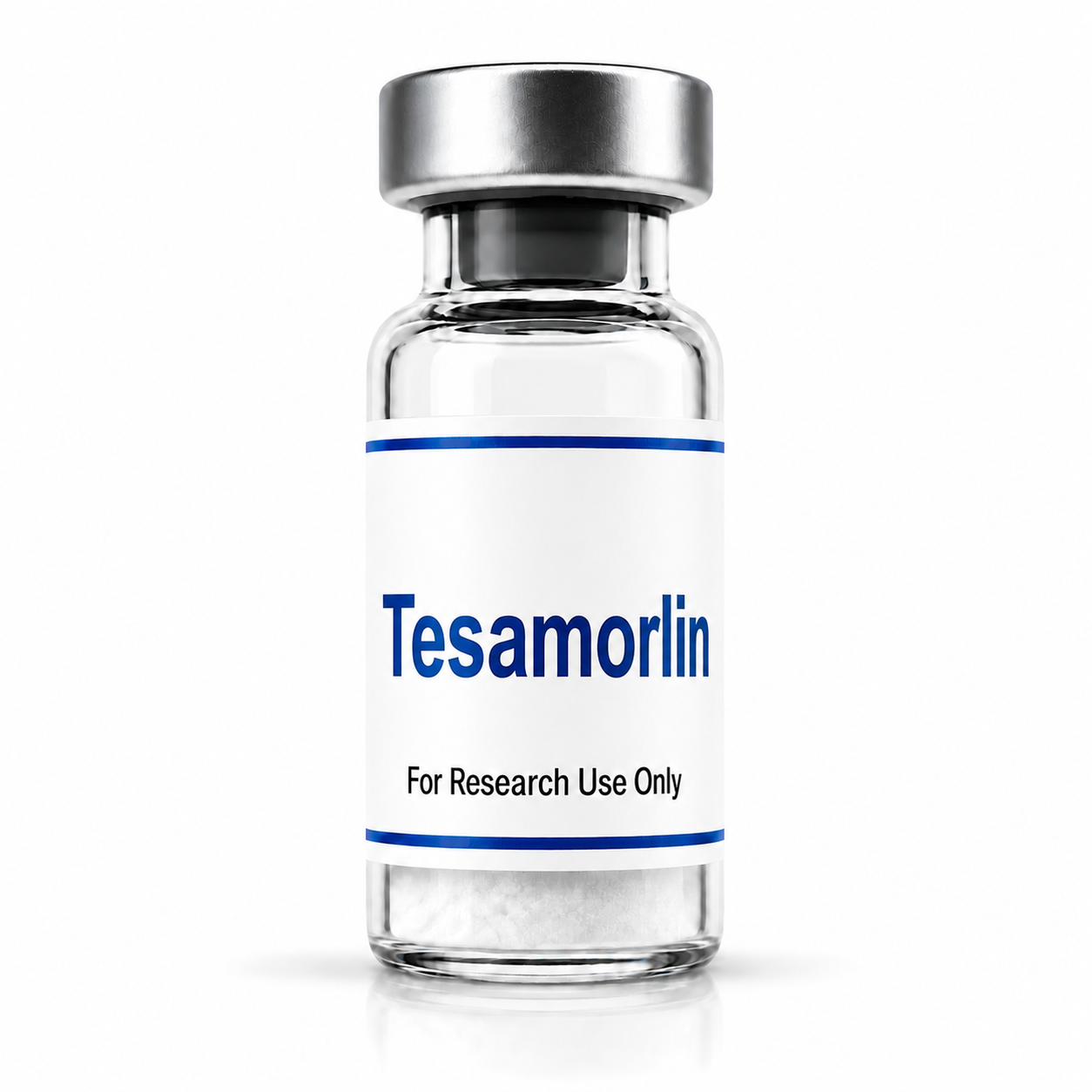
Tesamorlin
Every price, divided down to the milligram.
Sticker prices hide what a compound actually costs, because vial sizes differ. So we divide the listing by its stated peptide content and show the real cost per milligram.
Vendors pay us a commission when you buy through our links. It never changes the order — rows are sorted by measured price per mg, and every flag is computed from the data shown. Read the full disclosure
Where to buy
One listing trackedHow this page is funded: vendors listed here pay us a commission when you buy through our links. Commissions never change the ranking — rows are ordered by measured price per mg, and flags are computed from the data on this page. Sponsored placements, if any, are always labeled.
On this page
How to read these rows
Verify the COA
A certificate of analysis should come from an independent lab, reference the exact batch number on the label, and be recent. Vendor-issued documents without a named third-party lab carry less weight — the COA row links to what each vendor publishes.
Match the format
Lyophilized vials and sprays are different products with different concentrations. That is why sprays sit outside the $/mg ranking — compare vials to vials, sprays to sprays.
Count the total cost
Shipping fees, free-shipping thresholds and active discount codes can flip which vendor is actually cheapest for your order size. The $/mg figure is the baseline; the shipping and code details finish the math.
How we rank
The row below carries a price per mg figure: listed price divided by stated peptide content, excluding shipping and codes. It is the same calculation applied on every compound page, so a figure here is directly comparable to one anywhere else on the site.
We currently track a single listing for this compound. When a second vendor is added the rows are ordered by measured $/mg, and the flags for testing and shipping are computed from the data shown. Each row carries its own verification date.
About Tesamorlin
A 44-amino acid GHRH analog that stimulates pituitary gh secretion, studied for visceral adipose tissue reduction in clinical research. Premium Research Peptide.
N-terminal modification : hexenoyl moiety — a C6 chain with a double bond at position 3 — attached to the N-terminal tyrosine residue.
[FDA label; USPTO 10946073 / 11738066 / 12233107]
Structural shorthand : [trans-3-hexenoyl]hGHRH(1-44) amide (hexenoyl trans-3)hGHRH(1-44)NH2 [USPTO patents, Theratechnologies]
Class and target
Compound class : synthetic human growth hormone-releasing factor (GRF / GHRH) analog Receptor : GHRH receptor (GHRHR / GRF receptor) — G protein-coupled, pituitary somatotroph cells Reported activity : "In vitro, tesamorelin binds and stimulates human GRF receptors with similar potency as the endogenous GRF." [FDA label §12.1] Downstream : GHRH acts on pituitary somatotroph cells to stimulate synthesis and pulsatile release of endogenous GH. [FDA label §12.1] Structural rationale : the 44-aa human GRF sequence with the N-terminal hexenoyl group; the modification is described in the patent literature as conferring stability against enzymatic degradation relative to native GHRH.
Storage and handling
Appearance : white to off-white lyophilized powder [FDA label] Storage, lyophilized : −20 °C, protected from light and moisture [vendor consensus: UK Peptides, American Peptides, Pure Health, Bluum] Storage, reconstituted : 2–8 °C [vendor consensus] Reconstitution stability: up to 28 days at 2–8 °C, sterile conditions [UK Peptides — single source, not independently verified] Shelf life, unopened : ~2 years under recommended conditions [UK Peptides — single source] Freeze-thaw : minimize cycles; aliquot for long-term storage Handling note : allow sealed vials to reach ambient temperature before opening to prevent internal condensation
Regulatory background
Brand names : EGRIFTA, EGRIFTA SV (Theratechnologies Inc.) Initial U.S. approval : 2010 ATC code : H01AC06 Approved indication : reduction of excess abdominal fat in HIV-infected patients with lipodystrophy [FDA label §1] U.S. legal status : prescription only
PHARMACOKINETICS — verified from FDA label §12.3 Absolute bioavailability : <4% subcutaneous (2 mg dose, EGRIFTA 1 mg/vial formulation, healthy adults) Tmax (median) : 0.15 h Cmax (mean) : 2956.1 pg/mL (CV 47%) (single 1.4 mg SC dose, EGRIFTA SV) AUC0-inf (mean) : 889.1 pg·h/mL (CV 57%) Volume of distribution : 4.8 ± 1.9 L/kg (mean ± SD) Elimination half-life : 8 minutes (single 1.4 mg SC dose, healthy subjects) Metabolism : "No formal metabolism studies have been performed in humans." — label, verbatim AUC in HIV+ vs healthy : 34% higher in HIV-infected patients; Cmax similar between populations Renal / hepatic impair. : not established Pediatric / elderly PK : not established
Pharmacodynamics (FDA label §12.2)
Stimulates GH secretion; subsequently increases IGF-1 and IGFBP-3.
No clinically significant changes observed in TSH, LH, ACTH, or prolactin in clinical trials.
Regulatory detail (DailyMed / FDA)
BLA number : BLA022505 Labeler : Theratechnologies Inc. (US License No. 2091) NDC (EGRIFTA SV kit) : 62064-241-30 RxCUI : 1044587 (tesamorelin 2 MG Injection) 1044591 (Egrifta 2 MG Injection) Label last revised : 2/2024 (SPL updated Dec 23, 2025)
Approved indication
"reduction of excess abdominal fat in HIV-infected adult patients with lipodystrophy"
A note on storage. The FDA label directs the finished drug product (EGRIFTA SV vials) to be stored at 20–25 °C room temperature. That is a different formulation — it contains mannitol, sucrose, histidine and polysorbate 20 as excipients. It does NOT apply to a bare lyophilized research peptide. Use the research-vendor guidance above (−20 °C) for the research material, not the label figure.
Primary sources
FDA — EGRIFTA SV prescribing information DailyMed — EGRIFTA SV (tesamorelin) kit PubChem — Tesamorelin, CID 16137828 USPTO — Theratechnologies, GHRH analogues (structural definition) 10946073 · 11738066 · 12233107
Specifications
| Molecular formula | C221H366N72O67S |
|---|---|
| Molecular weight | 5135.9 Da (free base) |
| Monoisotopic mass | 5132.7166 Da |
| Salt form as supplied | acetate — C221H366N72O67S · x C2H4O2, x ≈ 7 |
| CAS Number (free base) | 218949-48-5 |
| CAS Number (acetate) | 901758-09-6 |
| PubChem CID | 16137828 ↗ |
| UNII | MQG94M5EEO (salt: LGW5H38VE3) |
| KEGG | D09015 |
| ChEBI | CHEBI:63626 |
| ChemSpider | 34982925 |
| ATC code | H01AC06 |
| Residue count | 44 |
| C-terminus | carboxamide (-NH2) |
| Structural shorthand | [trans-3-hexenoyl]hGHRH(1-44) amide |
| Sequence (one-letter backbone) | YADAIFTNSYRKVLGQLSARKLLQDIMSRQQGESNQERGARARL |
| Elimination half-life | 8 minutes (FDA label §12.3) |
| Brand names | EGRIFTA, EGRIFTA SV (Theratechnologies Inc.) |
Identity and pharmacokinetic values taken from the FDA prescribing information for EGRIFTA SV and from public chemical registries. In-vitro / preclinical characterisation only — no clinical or therapeutic claim is expressed or implied. Research use only.