Peptide Secretagogue Analogs · Checked
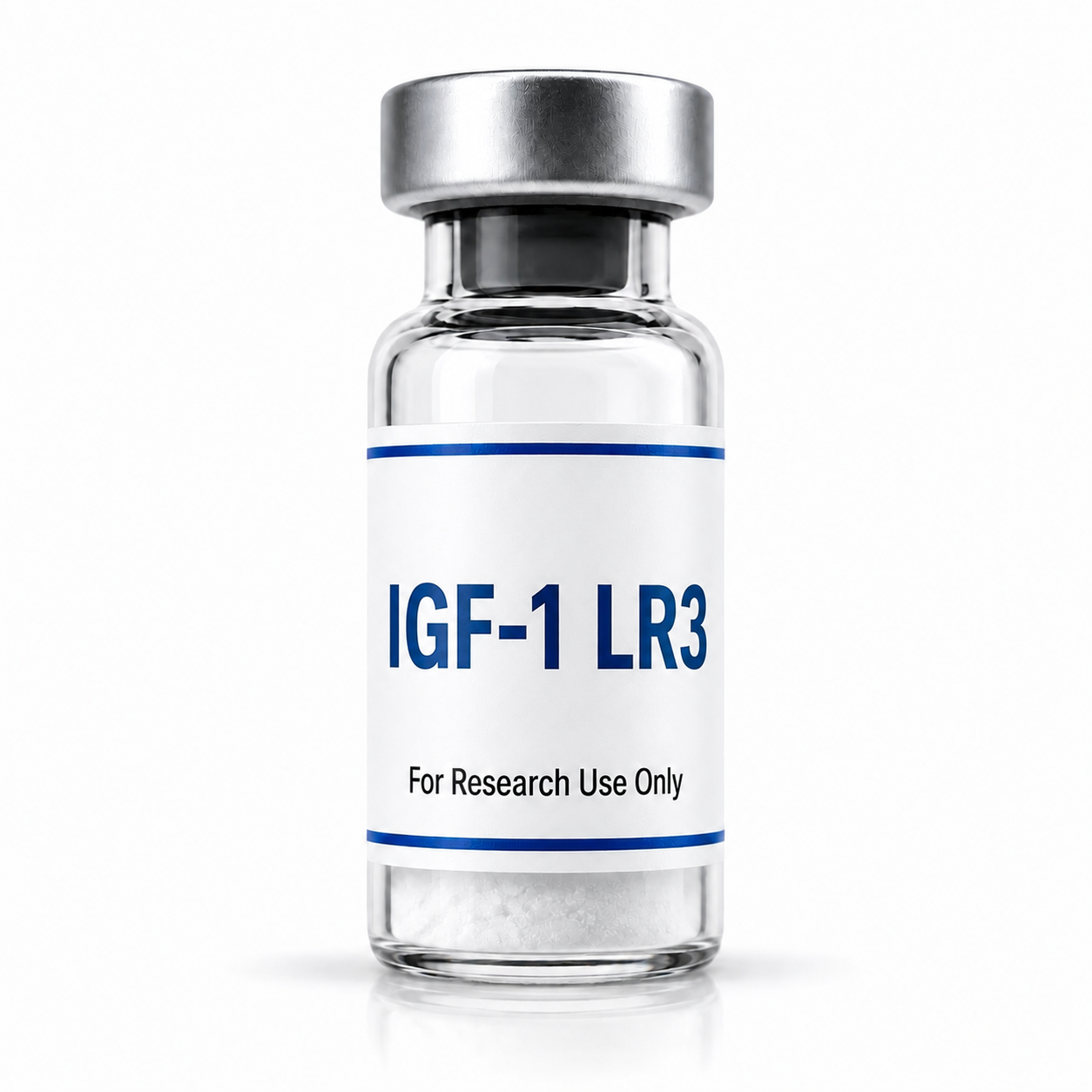
IGF-1 LR3
Every price, divided down to the milligram.
Vendors sell this compound in different vial sizes at different prices, which makes sticker prices useless for comparison. So we divide every listing by its stated peptide content and rank what comes out.
Vendors pay us a commission when you buy through our links. It never changes the order — rows are sorted by measured price per mg, and every flag is computed from the data shown. Read the full disclosure
Ranked by $ per mg
Sprays listed after the vials, unrankedHow this page is funded: vendors listed here pay us a commission when you buy through our links. Commissions never change the ranking — rows are ordered by measured price per mg, and flags are computed from the data on this page. Sponsored placements, if any, are always labeled.
On this page
How to read these rows
Verify the COA
A certificate of analysis should come from an independent lab, reference the exact batch number on the label, and be recent. Vendor-issued documents without a named third-party lab carry less weight — the COA row links to what each vendor publishes.
Match the format
Lyophilized vials and sprays are different products with different concentrations. That is why sprays sit outside the $/mg ranking — compare vials to vials, sprays to sprays.
Count the total cost
Shipping fees, free-shipping thresholds and active discount codes can flip which vendor is actually cheapest for your order size. The $/mg figure is the baseline; the shipping and code details finish the math.
How we rank
Rows are ordered by price per mg: listed price divided by stated peptide content, excluding shipping and codes, so every vial competes on the same axis. Each row carries its own $/mg figure, so the size of the gap between vendors is visible, not just the order. Sprays follow the vials, unranked.
The best-documented testing flag goes to the vendor publishing batch-level, third-party certificates. The shipping flag goes to the fastest published delivery from a domestic warehouse. Data is re-checked on a schedule and each row carries its verification date.
Long-R3 variant of insulin-like growth factor 1
Long R3 IGF-1 — ~3x more potent than native IGF-1 with an extended 20–30 hour half-life for muscle-growth research.
A 83-residue analog of insulin-like growth factor 1 with an N-terminal 13-residue extension and an Arg³ substitution characterised in the primary literature as reducing binding to IGF-binding proteins while retaining IGF-1 receptor activity in in-vitro assays. For laboratory characterisation only.
IGF-1 LR3 — clinical & mechanistic profile
IGF-1 LR3 is a synthetic 83-amino-acid IGF-1 analog with an Arg3 substitution and 13-aa N-terminal extension that reduces IGFBP binding, extending half-life from ~15 min to 20-30 hours. Activates PI3K/Akt/mTOR pathway for protein synthesis while suppressing FoxO-mediated ubiquitin-proteasome degradation via GSK3β inhibition.
Studied applications
- Extended half-life
- 20-30 hours vs. ~15 min for native IGF-1 due to reduced IGFBP binding
- PI3K/Akt/mTOR activation
- stimulates protein synthesis via mTOR, S6K1, and 4E-BP1 phosphorylation
- Catabolic suppression
- inhibits FoxO transcription factors and E3 ubiquitin ligases, reducing proteolysis
- GH synergy
- co-administration with GH enhances anabolism; GH drives endogenous IGF-1 production
- Satellite cell activation
- stimulates muscle stem cell proliferation and differentiation for hypertrophy
Research constraints & safety notes
- Not approved for human use in any jurisdiction
- Prohibited by WADA under S2 category (Peptide Hormones, Growth Factors)
- Potent growth factor activity raises significant safety concerns including cancer risk
- No human clinical trials conducted for any indication
- Hypoglycemia risk due to structural similarity to insulin
Full agonist (in vitro)
In-vitro autophosphorylation assays on isolated IGF-1 receptor report full agonism by LR3-IGF-1 with potency comparable to native IGF-1.
Reduced binding (in vitro)
The Arg³ substitution is described in the primary literature as reducing affinity for IGFBP-1, -2, -3, and -5 relative to native IGF-1, extending in-vitro receptor availability.
In-vitro / preclinical characterisation only — no clinical or therapeutic claim is expressed or implied. Research use only.
IGF-1 LR3 is a synthetic 83-amino-acid IGF-1 analog with an Arg3 substitution and 13-aa N-terminal extension that reduces IGFBP binding, extending half-life from ~15 min to 20-30 hours. Activates PI3K/Akt/mTOR pathway for protein synthesis while suppressing FoxO-mediated ubiquitin-proteasome degradation via GSK3β inhibition. It has a molecular formula C400H625N111O115S9, mass 9111.2 Da. Common synonyms in the literature include Long R3 IGF-1, Long arginine 3-IGF-1, and LR3-IGF-1.
What it’s studied for
Investigation of IGF-1 LR3 to date is primarily preclinical, with the majority of citations concentrated in animal models and in-vitro assays rather than randomized controlled human trials. Published work referencing IGF-1 LR3 spans Cell culture applications: IGF-1 LR3 is widely used in research cell culture media as a growth factor supplement. Its extended stability and higher bioactivity compared to native IGF-1 make it valuable for maintaining cells in serum-free or reduced-serum conditions, Skeletal muscle research: Animal studies have examined IGF-1 LR3's effects on muscle protein synthesis, satellite cell activation, and muscle hypertrophy. Research demonstrates activation of PI3K/Akt/mTOR pathways leading to increased protein synthesis and reduced protein degradation, and IGFBP binding studies: Structural research has characterized IGF-1 LR3's dramatically reduced affinity for all six IGF-binding proteins. This allows investigation of IGF-1R signaling without the confounding effects of IGFBP-mediated regulation. Proposed mechanisms in the literature include IGF-1R activation: binds IGF-1 receptor tyrosine kinase, triggering autophosphorylation and IRS-1 recruitment and PI3K/Akt cascade: activates protein synthesis via mTOR, S6K1, 4E-BP1; increases ribosome biogenesis. None of this material describes therapeutic outcomes in humans, and No vendor listed here provides dosing guidance for IGF-1 LR3 outside laboratory research.
Related research
For the full mechanistic profile, published references, and constraint notes on IGF-1 LR3, see the IGF-1 LR3 research page. All references cited on that page are peer-reviewed primary literature.
Research use only
Receptor engagement in the primary literature
Binding and functional-assay data for IGF-1 LR3, from peer-reviewed in-vitro pharmacology publications. Values are receptor activity parameters — not clinical outcomes.
Investigational context
Study designs referencing this compound in the published literature. Descriptions cover framework only — phase, participant count, duration, and citation — not outcomes. Click a card to review the source directly.
Specifications
| Attribute | Value |
|---|---|
| Molecular Formula | C400H625N111O115S9 |
| CAS Number | 143045-27-6 |
| Molecular Weight | 9117.5 g/mol |
| Sequence length | 83 residues |
| Physical form | Lyophilized powder |