Synthetic Peptide Compounds · Checked
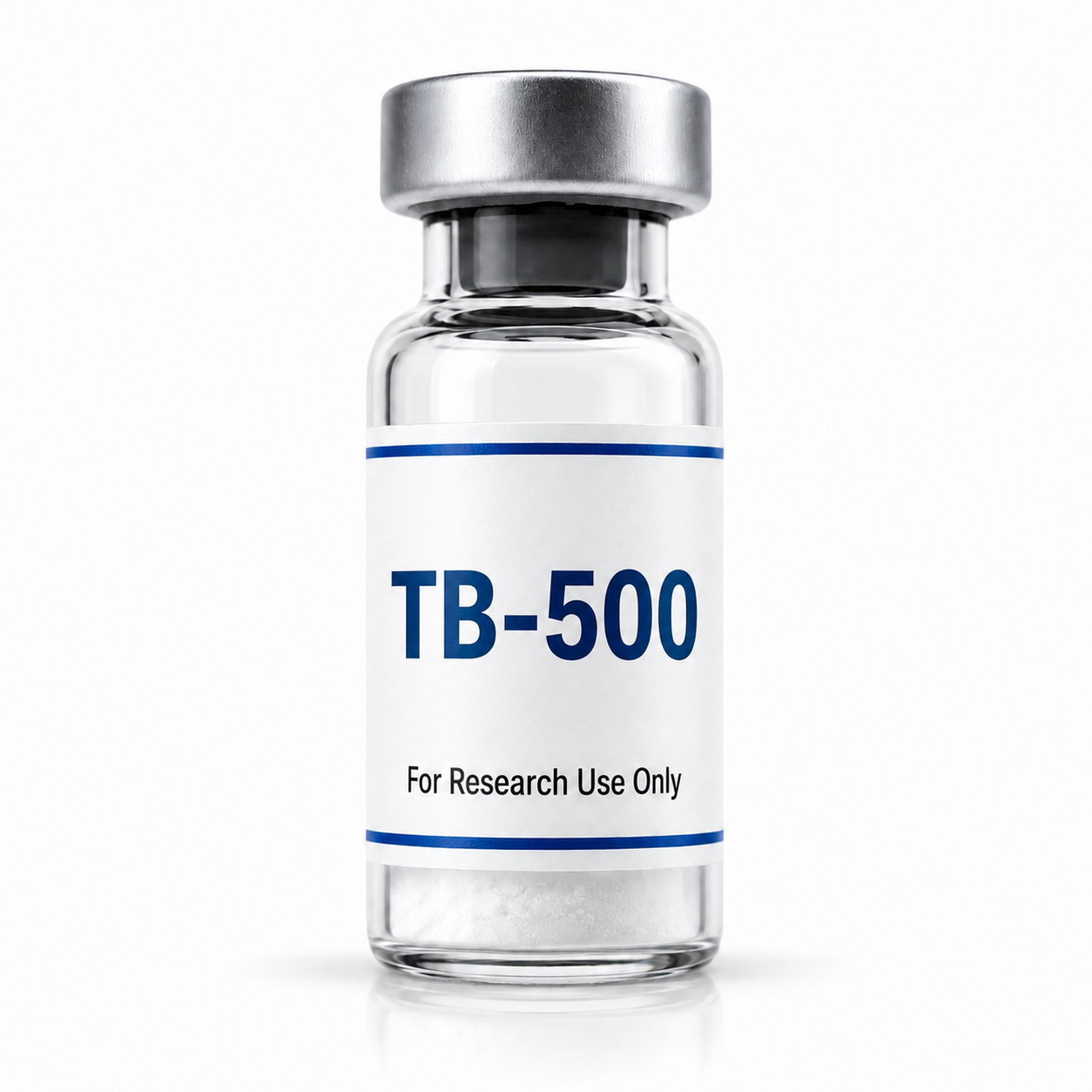
TB-500
Every price, divided down to the milligram.
Vendors sell this compound in different vial sizes at different prices, which makes sticker prices useless for comparison. So we divide every listing by its stated peptide content and rank what comes out.
Vendors pay us a commission when you buy through our links. It never changes the order — rows are sorted by measured price per mg, and every flag is computed from the data shown. Read the full disclosure
Ranked by $ per mg
Sprays listed after the vials, unrankedHow this page is funded: vendors listed here pay us a commission when you buy through our links. Commissions never change the ranking — rows are ordered by measured price per mg, and flags are computed from the data on this page. Sponsored placements, if any, are always labeled.
On this page
How to read these rows
Verify the COA
A certificate of analysis should come from an independent lab, reference the exact batch number on the label, and be recent. Vendor-issued documents without a named third-party lab carry less weight — the COA row links to what each vendor publishes.
Match the format
Lyophilized vials and sprays are different products with different concentrations. That is why sprays sit outside the $/mg ranking — compare vials to vials, sprays to sprays.
Count the total cost
Shipping fees, free-shipping thresholds and active discount codes can flip which vendor is actually cheapest for your order size. The $/mg figure is the baseline; the shipping and code details finish the math.
How we rank
Rows are ordered by price per mg: listed price divided by stated peptide content, excluding shipping and codes, so every vial competes on the same axis. Each row carries its own $/mg figure, so the size of the gap between vendors is visible, not just the order. Sprays follow the vials, unranked.
The best-documented testing flag goes to the vendor publishing batch-level, third-party certificates. The shipping flag goes to the fastest published delivery from a domestic warehouse. Data is re-checked on a schedule and each row carries its verification date.
Thymosin β4-derived actin-sequestering peptide
Thymosin Beta-4 fragment — systemic tissue repair, cell migration, and full-body recovery peptide.
A 43-residue peptide (or its Ac-SDKP N-terminal tetrapeptide fragment) characterised as a G-actin-sequestering molecule with published effects on cytoskeletal dynamics and vascular remodelling in preclinical models. For laboratory characterisation only.
Research summary
TB-500 (Thymosin Beta-4 Fragment) — clinical & mechanistic profile
TB-500 is a synthetic 7-amino-acid fragment from thymosin beta-4's actin-binding site. A Phase 1/2 trial launched February 2026 investigates its cardiovascular effects in adults with stable atherosclerotic disease. Phase 1 safety data in 84 healthy volunteers showed favorable tolerability. 2025 research reveals its wound-healing activity may stem from the metabolite Ac-LKKTE rather than the parent compound.
Studied applications
- G-actin sequestration
- forms 1:1 complex with G-actin, preventing F-actin assembly, modulating cytoskeletal dynamics for cell migration
- ROCK1 downregulation
- decreases ROCK1 protein levels particularly under hypoxia, reducing profibrotic signaling via MRTFA/SRF pathways
- Wound healing
- Phase 2 trials show 42% improvement in reepithelialization by day 4, 61% by day 7; thicker collagen, reduced scarring
- Cardiac protection
- post-MI trials with EPC transplantation showed improved walk time and cardiac function at 6 months; activates epicardial progenitors
- Progenitor mobilization
- enhances stem cell recruitment and differentiation; reactivates embryonic gene programs in cardiac tissue
Research constraints & safety notes
- Not approved by FDA or any regulatory agency for human therapeutic use
- Prohibited by WADA under S0 category (Non-Approved Substances) for athletic use
- Human clinical data limited to Phase 2 trials for specific wound types
- Most evidence derives from animal models rather than human subjects
- Long-term safety data in humans is not established
Product Description
What TB-500 (Thymosin Beta-4 Fragment) is
TB-500 (Thymosin Beta-4 Fragment) is a synthetic heptapeptide fragment of thymosin beta-4. TB-500 is a synthetic 7-amino-acid fragment from thymosin beta-4's actin-binding site. A Phase 1/2 trial launched February 2026 investigates its cardiovascular effects in adults with stable atherosclerotic disease. Phase 1 safety data in 84 healthy volunteers showed favorable tolerability. 2025 research reveals its wound-healing activity may stem from the metabolite Ac-LKKTE rather than the parent compound. It has a molecular formula C212H350N56O78S (full Tβ4), mass 4963 Da (full Tβ4) / ~900 Da (TB-500 fragment) Da. Its published amino-acid sequence is Ac-LKKTETQ (active fragment of 43-aa Tβ4). Common synonyms in the literature include Thymosin Beta 4, Tβ4, and TB4.
What it’s studied for
Investigation of TB-500 (Thymosin Beta-4 Fragment) to date is clinical-investigational, with the majority of citations concentrated in animal models and in-vitro assays rather than randomized controlled human trials. Published work referencing TB-500 (Thymosin Beta-4 Fragment) spans Dermal wound healing models: Phase 2 human trials for stasis and pressure ulcers showed accelerated healing by almost a month in responding patients. Day 4 topical application showed 42% improvement in reepithelialization vs. saline controls, increasing to 61% by day 7. Animal studies demonstrated thicker collagen fiber bundles with reduced wound width and scarring, Cardiac injury research: Human clinical trials explored TB-4's ability to protect and repair cardiac tissue following acute myocardial infarction. In one trial, endothelial progenitor cells combined with TB-4 were transplanted into post-MI patients, showing improved walk time and cardiac function after 6 months. Animal studies indicate TB-4 helps repair heart damage and improves cardiac vasculature, and Musculoskeletal models: Rodent studies have examined TB-500 in muscle injury, tendon healing, and ligament repair contexts. Observations include effects on fibroblast activity, collagen organization, and biomechanical recovery metrics. Proposed mechanisms in the literature include G-actin sequestration: binds G-actin 1:1, inhibits F-actin polymerization, modulates actin structures in hypoxic cardiac cells and ROCK1/MRTFA pathway: decreases ROCK1 protein, reduces profibrotic signaling via MRTFA/SRF in cardiac cells under hypoxia. None of this material describes therapeutic outcomes in humans, and No vendor listed here provides dosing guidance for TB-500 (Thymosin Beta-4 Fragment) outside laboratory research.
Related research
For the full mechanistic profile, published references, and constraint notes on TB-500 (Thymosin Beta-4 Fragment), see the TB-500 (Thymosin Beta-4 Fragment) research page. All references cited on that page are peer-reviewed primary literature.
About TB-500
TB-500 is a synthetic version of Thymosin Beta-4, a naturally occurring 43-amino acid peptide found in high concentrations in blood platelets, wound fluid, and other tissues. Thymosin Beta-4 was originally isolated from thymus extracts in the 1960s and has since been identified as a major actin-sequestering protein with significant roles in cell migration, differentiation, and cellular pathway. TB-500 represents a truncated, active region of the full Thymosin Beta-4 molecule, making it more practical for research applications while retaining the key biological activity associated with the parent molecule.
Mechanism of action
TB-500's biological effects stem from several well-characterized mechanisms that have been studied extensively in laboratory and preclinical settings:
Research Highlights
Cardiac Research : TB-500/Thymosin Beta-4 has been extensively studied in cardiac research. Studies in animal models of myocardial infarction have shown reduced scar formation, improved cardiac function, and enhanced survival of cardiomyocytes. Clinical trials have explored its potential in cardiac cellular-pathway research following heart attack. Corneal Healing Studies : Significant research has focused on TB-500's effects on corneal healing. Studies demonstrate accelerated corneal wound closure, reduced inflammation, and improved outcomes in various corneal injury models. This research led to clinical development of Thymosin Beta-4-based eye drops. Dermal Cellular Research : Research has examined TB-500's effects on skin wounds, including burns, incisions, and chronic wounds. Studies report accelerated wound closure, enhanced epithelialization, improved collagen organization, and reduced scarring in various experimental models. Musculoskeletal Research : Preclinical studies have investigated TB-500's effects on muscle, tendon, and ligament injuries. Research shows potential benefits for muscle strain recovery, tendon healing, and joint health, with observations of reduced inflammation and accelerated cellular pathway.
Reconstitution Protocol
1.Allow vial to reach room temperature before reconstitution 2.Use bacteriostatic water for multi-use applications 3.Add solvent gently down the inside wall of the vial 4.Allow to dissolve naturally or gently swirl—never shake 5.Typical reconstitution: 2mL per 5mg vial yields 2.5mg/mL concentration
Storage Guidelines
- Lyophilized TB-500 (normal)
- Refrigerate at 2–8°C
- Lyophilized TB-500 (long-term, until expiry)
- Store at −20°C for optimal stability
- Reconstituted
- Refrigerate at 2–8°C, stable for 2–3 weeks
- Protect from light exposure
- Avoid multiple freeze-thaw cycles—aliquot for long-term storage
Research References
[1] Goldstein AL, et al. Thymosin beta4: a multi-functional structural peptide. Expert Opin Biol Ther. 2012;12(suppl 1):S37-S51. [2] Sosne G, et al. Thymosin beta 4 promotes corneal wound-model research and decreases inflammation in vivo following alkali injury. Exp Eye Res. 2002;74(2):293-299. [3] Bock-Marquette I, et al. Thymosin beta4 activates integrin-linked kinase and promotes cardiac cell migration, survival and cardiac repair. Nature. 2004;432(7016):466-472. [4] Hinkel R, et al. Thymosin beta4: a key factor for protective effects of eEPCs in acute and chronic ischemia. Ann N Y Acad Sci. 2010;1194:105-111.
For research use only. This summary is a research-scientific overview compiled from peer-reviewed sources. It is not medical advice and is not intended for human or veterinary consumption.
Receptor engagement in the primary literature
Binding and functional-assay data for TB-500, from peer-reviewed in-vitro pharmacology publications. Values are receptor activity parameters — not clinical outcomes.
Thymosin β4 is characterised in the primary literature as the principal G-actin-sequestering peptide in mammalian cells, maintaining the monomeric actin pool.
Source: Goldstein et al., Nat Rev Mol Cell Biol 2005
In-vitro endothelial and myocardial models report Tβ4-mediated upregulation of vascular endothelial growth factor, proposed as an angiogenic mechanism.
Source: Bock-Marquette et al., Nature 2004
Corneal-wound and dermal in-vitro assays describe Tβ4-mediated modulation of MMP-2 and MMP-9, implicated in extracellular matrix remodelling.
Source: Sosne et al., Ann N Y Acad Sci 2010
In-vitro / preclinical characterisation only — no clinical or therapeutic claim is expressed or implied. Research use only.
Investigational context
Study designs referencing this compound in the published literature. Descriptions cover framework only — phase, participant count, duration, and citation — not outcomes. Click a card to review the source directly.
Specifications
| Attribute | Value |
|---|---|
| Molecular Formula | C212H350N56O78S |
| Molecular Weight | 4963.5 g/mol |
| Sequence | Ac-Ser-Asp-Lys-Pro-Asp-Met-Ala-Glu-Ile-Glu-Lys-Phe-Asp-Lys-Ser-Lys-Leu-Lys-Lys-Thr-Glu-Thr-Gln-Glu-Lys-Asn-Pro-Leu-Pro-Ser-Lys-Glu-Thr-Ile-Glu-Gln-Glu-Lys-Gln-Ala-Gly-Glu-Ser |
| Sequence length | 43 residues |
| Physical form | Lyophilized powder |
| PubChem CID | 3037653 ↗ |
Chemistry comparison — regenerative research peptides
Two peptides frequently studied together in tissue-regeneration research. Reference chemistry only — no comparative-effectiveness claim expressed or implied.
| Compound | Sequence | MW | Half-life (lit.) | Reference |
|---|---|---|---|---|
| BPC-157peptide | 15 residues | 1419.53 g/mol | in-vitro dependent | Sikiric 2018 review |
| Thymosin β4 (TB-500 fragment)peptide | 43 residues (full-length Tβ4) | 4964 g/mol (Tβ4) | in-vitro dependent | Goldstein Nat Rev 2005 |
Reference chemistry only. Receptor-binding indications are qualitative (compound engages / does not engage the receptor in in-vitro assays as reported in the cited literature). No comparative-effectiveness claim is expressed or implied.