Synthetic Peptide Compounds · Checked
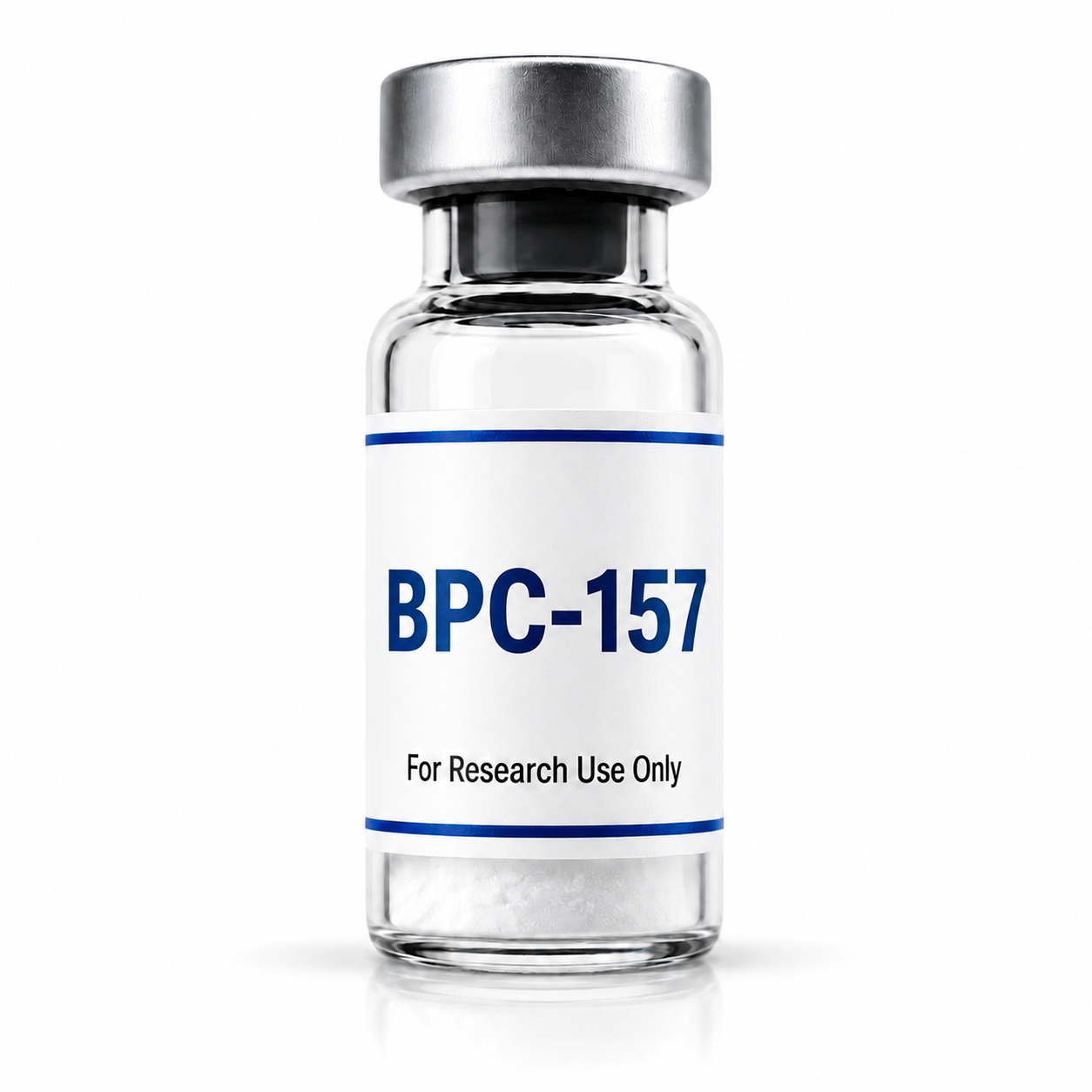
BPC-157
Every price, divided down to the milligram.
Vendors sell this compound in different vial sizes at different prices, which makes sticker prices useless for comparison. So we divide every listing by its stated peptide content and rank what comes out.
Vendors pay us a commission when you buy through our links. It never changes the order — rows are sorted by measured price per mg, and every flag is computed from the data shown. Read the full disclosure
Ranked by $ per mg
Sprays listed after the vials, unrankedHow this page is funded: vendors listed here pay us a commission when you buy through our links. Commissions never change the ranking — rows are ordered by measured price per mg, and flags are computed from the data on this page. Sponsored placements, if any, are always labeled.
On this page
How to read these rows
Verify the COA
A certificate of analysis should come from an independent lab, reference the exact batch number on the label, and be recent. Vendor-issued documents without a named third-party lab carry less weight — the COA row links to what each vendor publishes.
Match the format
Lyophilized vials and sprays are different products with different concentrations. That is why sprays sit outside the $/mg ranking — compare vials to vials, sprays to sprays.
Count the total cost
Shipping fees, free-shipping thresholds and active discount codes can flip which vendor is actually cheapest for your order size. The $/mg figure is the baseline; the shipping and code details finish the math.
How we rank
Rows are ordered by price per mg: listed price divided by stated peptide content, excluding shipping and codes, so every vial competes on the same axis. Each row carries its own $/mg figure, so the size of the gap between vendors is visible, not just the order. Sprays follow the vials, unranked.
The best-documented testing flag goes to the vendor publishing batch-level, third-party certificates. The shipping flag goes to the fastest published delivery from a domestic warehouse. Data is re-checked on a schedule and each row carries its verification date.
Body-protective pentadecapeptide
Body Protection Compound-157 — extensively researched for tissue repair, tendon/ligament healing, and gut protection.
A 15-residue synthetic peptide derived from a sequence in human gastric juice, extensively characterised in preclinical wound-healing and tissue-integrity models. For laboratory characterisation only.
BPC-157 is a synthetic 15-amino-acid peptide derived from a gastric protective protein. As of 2026, only 3 published human studies exist (all pilot-scale with <30 subjects), but 500+ preclinical studies show tissue healing effects. A 2025 IV safety study (up to 20mg) in healthy adults showed no adverse events across cardiac, hepatic, and renal biomarkers. It has a molecular formula C62H98N16O22, mass 1419.53 Da. Its published amino-acid sequence is Gly-Glu-Pro-Pro-Pro-Gly-Lys-Pro-Ala-Asp-Asp-Ala-Gly-Leu-Val. Common synonyms in the literature include Body Protection Compound-157, Bepecin, and PL 14736.
What it’s studied for
Investigation of BPC-157 to date is primarily preclinical, with the majority of citations concentrated in animal models and in-vitro assays rather than randomized controlled human trials. Published work referencing BPC-157 spans In-vitro cell culture studies: BPC-157 has been examined in fibroblast, endothelial cell, and smooth muscle cell lines to observe effects on cell migration, proliferation, oxidative stress responses, and signaling pathway activation. These controlled experiments provide mechanistic insight at the cellular level but do not fully represent complex whole-organism physiology, Tendon and ligament models: Rodent studies have investigated BPC-157 in surgically induced or chemically induced tendon injuries, including Achilles tendon transection models. Researchers have reported observations on healing timelines, collagen fiber alignment, tensile strength measurements, and histological markers of tissue maturation, and Musculoskeletal injury research: Animal studies have explored BPC-157 in crushed muscle and transected muscle paradigms, with observations reported on fibroblast survival, cell migration, biomechanical recovery metrics, and regeneration markers. Proposed mechanisms in the literature include VEGF and angiogenesis: upregulates VEGF expression in vivo, activates VEGFR2 receptors on endothelial cells, triggers Akt-eNOS pathway phosphorylation and Nitric oxide modulation: enhances endothelial NOS (eNOS) activity via Src-Cav-1-eNOS pathways, influences NO synthase activity and vascular tone. None of this material describes therapeutic outcomes in humans, and No vendor listed here provides dosing guidance for BPC-157 outside laboratory research.
Related research
For the full mechanistic profile, published references, and constraint notes on BPC-157, see the BPC-157 research page. All references cited on that page are peer-reviewed primary literature.
About BPC-157
BPC-157 (Body Protection Compound-157) is a synthetic pentadecapeptide derived from a protective protein found naturally in human gastric juice. Consisting of 15 amino acids with the sequence Gly-Glu-Pro-Pro-Pro-Gly-Lys-Pro-Ala-Asp-Asp-Ala-Gly-Leu-Val, BPC-157 has emerged as one of the most extensively researched peptides in cellular-pathway research. Originally isolated by Professor Predrag Sikiric at the University of Zagreb, this peptide has been the subject of numerous preclinical investigations examining its potential protective and cellular-pathway properties in various tissue types.
Mechanism of action
BPC-157's biological activity involves multiple interacting pathways that researchers believe contribute to its observed effects in experimental models:
Research Highlights
Gastrointestinal Studies. BPC-157 was originally studied for its gastric protective properties. Research has examined its effects on various GI conditions in animal models, including gastric ulcers, inflammatory bowel conditions, and esophageal damage. Studies suggest it may promote mucosal integrity and accelerate healing in damaged GI tissue.
Musculoskeletal Research. Extensive preclinical studies have investigated BPC-157's effects on tendons, ligaments, and muscle tissue. Research in rat models has shown accelerated healing of transected Achilles tendons, quadriceps muscles, and various ligaments. Studies suggest enhanced collagen organization and accelerated functional recovery.
Wound-Model Research. Research has examined BPC-157's effects on various wound types, including burns, incisions, and diabetic wounds. Studies report enhanced angiogenesis (blood vessel formation), accelerated granulation tissue formation, and improved wound closure rates in experimental models.
Neurological Research. Emerging research has explored BPC-157's potential neuroprotective properties. Studies in animal models have examined effects on peripheral nerve injuries, traumatic brain injury, and various neurotoxicity models. Some research suggests potential dopaminergic system interactions.
Reconstitution Protocol
1.Allow vial to reach room temperature (15-20 minutes) 2.Use bacteriostatic water or sterile water for injection 3.Add solvent slowly down the vial wall—do not spray directly on powder 4.Gently swirl to dissolve—do not shake or vortex 5.Solution should be clear and colorless
Storage Guidelines
- Lyophilized (normal)
- Refrigerate at 2–8°C, stable for months
- Lyophilized (long-term, until expiry)
- Store at −20°C, stable for 2+ years
- Reconstituted
- Store at 2–8°C, use within 4 weeks
- Handling
- Protect from light and repeated freeze-thaw cycles
- For long-term storage of reconstituted peptide, aliquot into single-use portions
For research use only.Not for human or veterinary use. All data on this page reflects chemistry attributes, in-vitro pharmacology, and study-framework metadata from published peer-reviewed literature. No statement describes or implies any therapeutic effect in humans. These statements have not been evaluated by the FDA; this product is not intended to diagnose, treat, cure, or prevent any disease. Sold exclusively to qualified researchers and institutions.
Receptor engagement in the primary literature
Binding and functional-assay data for BPC-157, from peer-reviewed in-vitro pharmacology publications. Values are receptor activity parameters — not clinical outcomes.
Preclinical models report BPC-157-mediated upregulation of VEGF-R2 signalling, correlated with angiogenic effects in tendon and vascular repair models.
Source: Chang et al., J Appl Physiol 2011
The peptide is described in reviews as modulating endothelial and neuronal NO synthase activity, implicated in vasomotor and cytoprotective effects.
Source: Sikiric et al., Curr Pharm Des 2018
Preclinical tendon fibroblast cultures report GH-receptor upregulation by BPC-157, proposed as a mechanism for enhanced tendon fibroblast proliferation and migration.
Source: Chang et al., PLoS ONE 2014
In-vitro / preclinical characterisation only — no clinical or therapeutic claim is expressed or implied. Research use only.
Investigational context
Study designs referencing this compound in the published literature. Descriptions cover framework only — phase, participant count, duration, and citation — not outcomes. Click a card to review the source directly.
Specifications
| Attribute | Value |
|---|---|
| Molecular Formula | C62H98N16O22 |
| Molecular Weight | 1419.53 g/mol |
| Sequence | Gly-Glu-Pro-Pro-Pro-Gly-Lys-Pro-Ala-Asp-Asp-Ala-Gly-Leu-Val |
| Sequence length | 15 residues |
| Physical form | Lyophilized powder |
| PubChem CID | 9941957 ↗ |
Chemistry comparison — regenerative research peptides
Two peptides frequently studied together in tissue-regeneration research. Reference chemistry only — no comparative-effectiveness claim expressed or implied.
| Compound | Sequence | MW | Half-life (lit.) | Reference |
|---|---|---|---|---|
| BPC-157peptide | 15 residues | 1419.53 g/mol | in-vitro dependent | Sikiric 2018 review |
| Thymosin β4 (TB-500 fragment)peptide | 43 residues (full-length Tβ4) | 4964 g/mol (Tβ4) | in-vitro dependent | Goldstein Nat Rev 2005 |
Reference chemistry only. Receptor-binding indications are qualitative (compound engages / does not engage the receptor in in-vitro assays as reported in the cited literature). No comparative-effectiveness claim is expressed or implied.