Synthetic Peptide Compounds · Checked
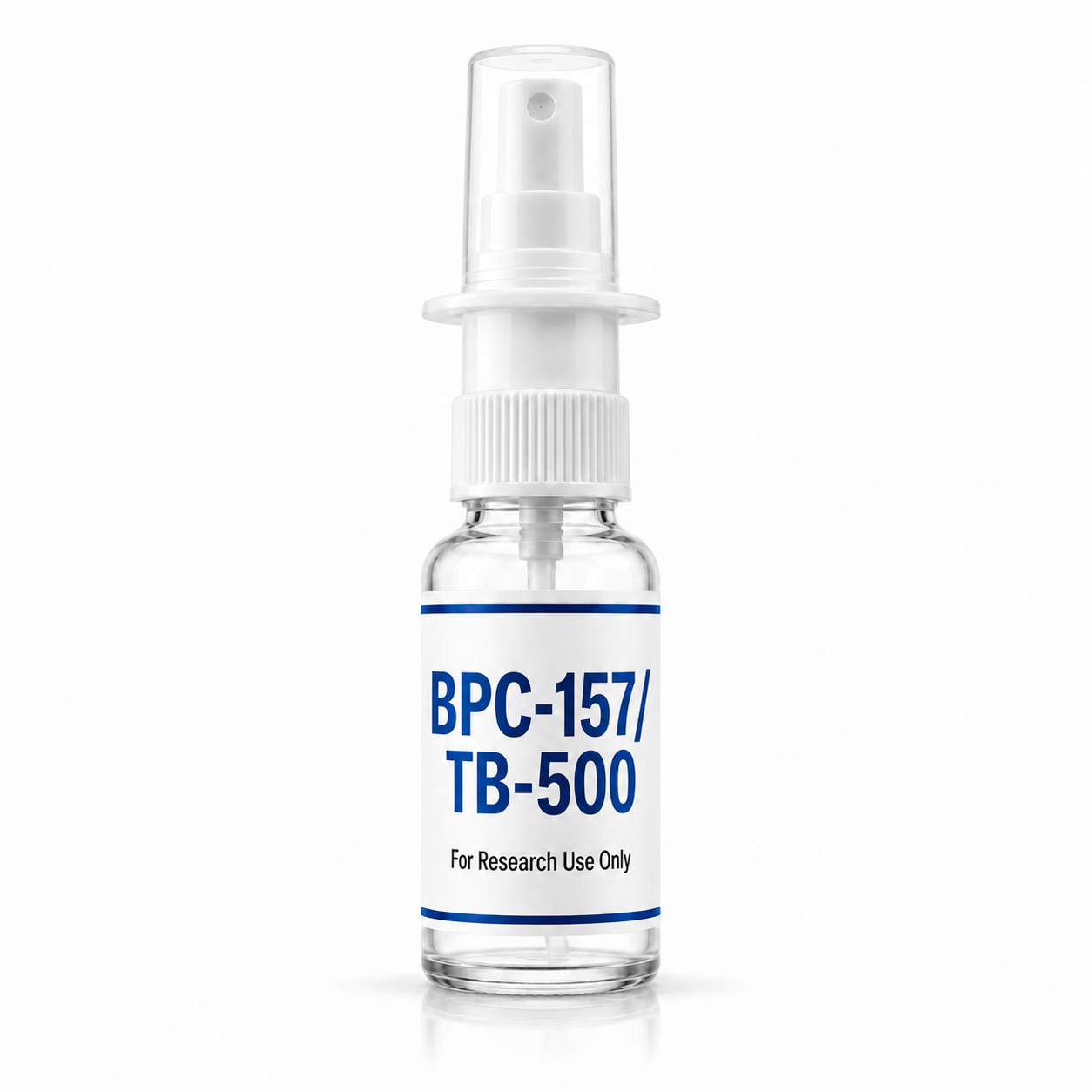
BPC-157 TB-500 Spray
Every price, divided down to the milligram.
Sticker prices hide what a compound actually costs, because vial sizes differ. So we divide the listing by its stated peptide content and show the real cost per milligram.
Vendors pay us a commission when you buy through our links. It never changes the order — rows are sorted by measured price per mg, and every flag is computed from the data shown. Read the full disclosure
Where to buy
One listing trackedHow this page is funded: vendors listed here pay us a commission when you buy through our links. Commissions never change the ranking — rows are ordered by measured price per mg, and flags are computed from the data on this page. Sponsored placements, if any, are always labeled.
On this page
How to read these rows
Verify the COA
A certificate of analysis should come from an independent lab, reference the exact batch number on the label, and be recent. Vendor-issued documents without a named third-party lab carry less weight — the COA row links to what each vendor publishes.
Match the format
Lyophilized vials and sprays are different products with different concentrations. That is why sprays sit outside the $/mg ranking — compare vials to vials, sprays to sprays.
Count the total cost
Shipping fees, free-shipping thresholds and active discount codes can flip which vendor is actually cheapest for your order size. The $/mg figure is the baseline; the shipping and code details finish the math.
How we rank
The row below carries a price per mg figure: listed price divided by stated peptide content, excluding shipping and codes. It is the same calculation applied on every compound page, so a figure here is directly comparable to one anywhere else on the site.
We currently track a single listing for this compound. When a second vendor is added the rows are ordered by measured $/mg, and the flags for testing and shipping are computed from the data shown. Each row carries its own verification date.
About BPC-157 TB-500 Spray
Dual-peptide blend of BPC-157 + TB-500 — the go-to recovery and tissue-repair stack.
BPC-157 — clinical & mechanistic profile
BPC-157 is a synthetic 15-amino-acid peptide derived from a gastric protective protein. As of 2026, only 3 published human studies exist (all pilot-scale with <30 subjects), but 500+ preclinical studies show tissue healing effects. A 2025 IV safety study (up to 20mg) in healthy adults showed no adverse events across cardiac, hepatic, and renal biomarkers.
Studied applications
- Peptide research pathways
- studied in tendon, ligament, and muscle injury models with histological and biomechanical endpoints
- Vascular and NO signaling
- investigated for effects on microcirculation and endothelial behavior in stress and injury contexts
- Protective signaling
- examined in gastrointestinal, neural, and systemic injury models across multiple organ systems
- Fibroblast activity
- associated with extracellular matrix remodeling and cell migration in connective tissue models
- Gastrointestinal integrity
- studied in gastric ulcer, IBD, and intestinal anastomosis models for mucosal protection
- Central nervous system
- explored in nerve injury and neurodegenerative disease models in rodents
Research constraints & safety notes
- No completed human clinical trials establishing safety or efficacy - majority of evidence is preclinical (in vitro and animal models)
- Preclinical findings do not establish clinical efficacy in humans and should be interpreted within experimental model limitations
- Research originates predominantly from a limited number of research groups, with variable independent replication
- Not approved by FDA, EMA, or any regulatory agency for therapeutic, medical, or supplemental use in humans
- Classified as Category 2 bulk drug substance by FDA (2023) - cannot be compounded by commercial pharmaceutical companies
BPC-157 is a synthetic 15-amino-acid pentadecapeptide (gastric peptide fragment). BPC-157 is a synthetic 15-amino-acid peptide derived from a gastric protective protein. As of 2026, only 3 published human studies exist (all pilot-scale with <30 subjects), but 500+ preclinical studies show tissue healing effects. A 2025 IV safety study (up to 20mg) in healthy adults showed no adverse events across cardiac, hepatic, and renal biomarkers. It has a molecular formula C62H98N16O22, mass 1419.53 Da. Its published amino-acid sequence is Gly-Glu-Pro-Pro-Pro-Gly-Lys-Pro-Ala-Asp-Asp-Ala-Gly-Leu-Val. Common synonyms in the literature include Body Protection Compound-157, Bepecin, and PL 14736. This SKU is a co-formulated blend that also contains TB-500 (Thymosin Beta-4 Fragment) in the same vial — for research groups that want to combine the two under a single reconstitution.
What it’s studied for
Investigation of BPC-157 to date is primarily preclinical, with the majority of citations concentrated in animal models and in-vitro assays rather than randomized controlled human trials. Published work referencing BPC-157 spans In-vitro cell culture studies: BPC-157 has been examined in fibroblast, endothelial cell, and smooth muscle cell lines to observe effects on cell migration, proliferation, oxidative stress responses, and signaling pathway activation. These controlled experiments provide mechanistic insight at the cellular level but do not fully represent complex whole-organism physiology, Tendon and ligament models: Rodent studies have investigated BPC-157 in surgically induced or chemically induced tendon injuries, including Achilles tendon transection models. Researchers have reported observations on healing timelines, collagen fiber alignment, tensile strength measurements, and histological markers of tissue maturation, and Musculoskeletal injury research: Animal studies have explored BPC-157 in crushed muscle and transected muscle paradigms, with observations reported on fibroblast survival, cell migration, biomechanical recovery metrics, and regeneration markers. Proposed mechanisms in the literature include VEGF and angiogenesis: upregulates VEGF expression in vivo, activates VEGFR2 receptors on endothelial cells, triggers Akt-eNOS pathway phosphorylation and Nitric oxide modulation: enhances endothelial NOS (eNOS) activity via Src-Cav-1-eNOS pathways, influences NO synthase activity and vascular tone. None of this material describes therapeutic outcomes in humans, and No vendor listed here provides dosing guidance for BPC-157 outside laboratory research.
Related research
For the full mechanistic profile, published references, and constraint notes on BPC-157, see the BPC-157 research page. All references cited on that page are peer-reviewed primary literature.
For research use only. This summary is a research-scientific overview compiled from peer-reviewed sources. It is not medical advice and is not intended for human or veterinary consumption.
Specifications
| Attribute | Value |
|---|---|
| Molecular Formula | C62H98N16O22 + C212H350N56O78S |
| Molecular Weight | 1419.53 + 4963.5 g/mol |
| Sequence | Gly-Glu-Pro-Pro-Pro-Gly-Lys-Pro-Ala-Asp-Asp-Ala-Gly-Leu-Val |