Peptide Analog Compounds · Checked
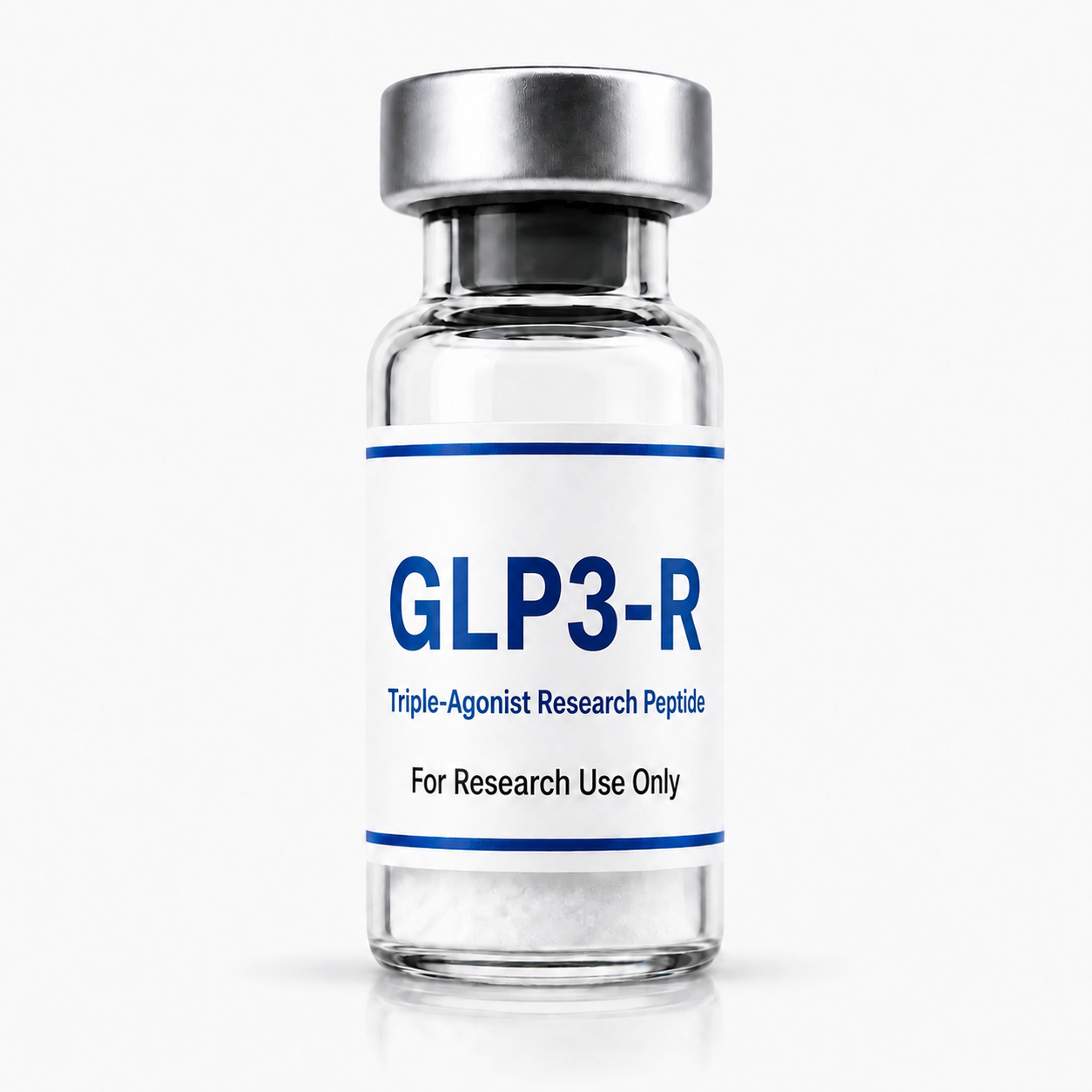
GLP3R - retatrutide
Every price, divided down to the milligram.
Vendors sell this compound in different vial sizes at different prices, which makes sticker prices useless for comparison. So we divide every listing by its stated peptide content and rank what comes out.
Vendors pay us a commission when you buy through our links. It never changes the order — rows are sorted by measured price per mg, and every flag is computed from the data shown. Read the full disclosure
Ranked by $ per mg
Sprays listed after the vials, unrankedHow this page is funded: vendors listed here pay us a commission when you buy through our links. Commissions never change the ranking — rows are ordered by measured price per mg, and flags are computed from the data on this page. Sponsored placements, if any, are always labeled.
On this page
How to read these rows
Verify the COA
A certificate of analysis should come from an independent lab, reference the exact batch number on the label, and be recent. Vendor-issued documents without a named third-party lab carry less weight — the COA row links to what each vendor publishes.
Match the format
Lyophilized vials and sprays are different products with different concentrations. That is why sprays sit outside the $/mg ranking — compare vials to vials, sprays to sprays.
Count the total cost
Shipping fees, free-shipping thresholds and active discount codes can flip which vendor is actually cheapest for your order size. The $/mg figure is the baseline; the shipping and code details finish the math.
How we rank
Rows are ordered by price per mg: listed price divided by stated peptide content, excluding shipping and codes, so every vial competes on the same axis. Each row carries its own $/mg figure, so the size of the gap between vendors is visible, not just the order. Sprays follow the vials, unranked.
The best-documented testing flag goes to the vendor publishing batch-level, third-party certificates. The shipping flag goes to the fastest published delivery from a domestic warehouse. Data is re-checked on a schedule and each row carries its verification date.
Triple-receptor investigational analog
Triple GLP-1 / GIP / glucagon receptor agonist — the highest-recorded weight loss of any obesity peptide.
A 39-residue synthetic peptide reported in the literature to engage the GLP-1, GIP, and glucagon receptors simultaneously in in-vitro assays. For laboratory characterisation only.
GLP3-R — clinical & mechanistic profile
GLP3-R (Retatrutide/LY3437943) is a first-in-class triple agonist targeting GIP, GLP-1, and glucagon receptors simultaneously. Phase 3 TRIUMPH-4 trial (2026) showed 28.7% weight loss at 12mg/68 weeks — the highest ever reported. Additional Phase 3 data shows A1C reductions of 1.7-2.0%, up to 100% liver fat reduction in MASLD, and 14 mmHg systolic BP reduction. FDA approval projected for 2027.
Studied applications
- Triple receptor agonism
- first compound to activate GIP, GLP-1, and glucagon receptors in a single molecule
- Phase 2 results
- achieved 24.2% mean weight loss at highest dose (12 mg) over 48 weeks—highest reported for any anti-obesity medication
- Phase 3 trials
- multiple ongoing studies including TRIUMPH program for obesity, T2D, CKD, osteoarthritis, and cardiovascular outcomes
- Glucagon component
- adds energy expenditure and hepatic fat reduction beyond dual agonists
- No plateau observed
- weight loss continued throughout 48-week Phase 2 study without leveling off
Research constraints & safety notes
- Investigational compound—NOT yet FDA approved for any indication
- Phase 3 trials ongoing through 2025-2026 with results pending
- Glucagon component requires careful glycemic management in T2D patients
- Long-term safety data still being collected
- Not available as approved medication; only in clinical trials or as research compound
Full agonist (in vitro)
In-vitro cAMP assays report engagement of the GLP-1 receptor pathway; described in the primary literature as the canonical incretin arm of the molecule.
Full agonist (in vitro)
In-vitro receptor binding characterised at the GIP receptor. Discussed in the literature as a second incretin arm distinct from GLP-1R engagement.
Full agonist (in vitro)
In-vitro engagement at the glucagon receptor is the pharmacological feature distinguishing this compound from prior dual GLP-1/GIP analogs in the same literature.
In-vitro / preclinical characterisation only — no clinical or therapeutic claim is expressed or implied. Research use only.
GLP3-R is a synthetic 39-amino-acid triple incretin/glucagon receptor agonist. GLP3-R (Retatrutide/LY3437943) is a first-in-class triple agonist targeting GIP, GLP-1, and glucagon receptors simultaneously. Phase 3 TRIUMPH-4 trial (2026) showed 28.7% weight loss at 12mg/68 weeks — the highest ever reported. Additional Phase 3 data shows A1C reductions of 1.7-2.0%, up to 100% liver fat reduction in MASLD, and 14 mmHg systolic BP reduction. FDA approval projected for 2027. It has a mass 4624.2 Da. Common synonyms in the literature include Retatrutide, retatrutide, and LY3437943.
What it’s studied for
Investigation of GLP3-R to date is clinical-investigational, with the majority of citations concentrated in animal models and in-vitro assays rather than randomized controlled human trials. Published work referencing GLP3-R spans Phase 2 obesity trial (NEJM 2023): In 338 adults with BMI ≥30 (or ≥27 with comorbidities), glp3-r achieved dose-dependent weight loss: 8.7% (1 mg), 17.1% (4 mg), 22.8% (8 mg), and 24.2% (12 mg) at 48 weeks vs. 2.1% placebo. Weight loss trajectory showed no plateau, suggesting continued efficacy beyond 48 weeks, Phase 2 type 2 diabetes trial: In adults with T2D, glp3-r showed HbA1c reductions of 2.0% and significant weight loss while maintaining glycemic control despite glucagon component. Safety profile similar to GLP-1 agonists, and Ongoing Phase 3 TRIUMPH program: Multiple trials initiated in 2023-2024 including obesity (TRIUMPH-3), obesity with CKD, obesity with knee osteoarthritis (TRIUMPH-4), obesity with chronic low back pain, cardiovascular outcomes (5-year CVOT), and head-to-head comparison vs. glp2-t. Proposed mechanisms in the literature include GLP-1 receptor agonism: glucose-dependent insulin secretion, appetite suppression, delayed gastric emptying and GIP receptor agonism: enhanced insulin sensitivity, potentiation of GLP-1 effects, improved lipid handling. None of this material describes therapeutic outcomes in humans, and No vendor listed here provides dosing guidance for GLP3-R outside laboratory research.
Related research
For the full mechanistic profile, published references, and constraint notes on GLP3-R, see the GLP3-R research page. All references cited on that page are peer-reviewed primary literature.
For research use only. This summary is a research-scientific overview compiled from peer-reviewed sources. It is not medical advice and is not intended for human or veterinary consumption.
Receptor engagement in the primary literature
Binding and functional-assay data for GLP3-R, from peer-reviewed in-vitro pharmacology publications. Values are receptor activity parameters — not clinical outcomes.
Investigational context
Study designs referencing this compound in the published literature. Descriptions cover framework only — phase, participant count, duration, and citation — not outcomes. Click a card to review the source directly.
Specifications
| Attribute | Value |
|---|---|
| Molecular Formula | C237H382N66O70S |
| Molecular Weight | 5414.91 g/mol |
| Sequence | His-Aib-Glu-Gly-Thr-Phe-Thr-Ser-Asp-Leu-Ser-Lys-Gln-Met-Glu-Glu-Glu-Ala-Val-Arg-Leu-Phe-Ile-Glu-Trp-Leu-Lys-Asn-Gly-Gly-Pro-Ser-Ser-Gly-Ala-Pro-Pro-Pro-Ser-Aib-Gln-Asp-Glu-Leu-Phe-Glu-Trp-Leu-Leu-Glu-Gln-Leu-Arg-NH2 |
| Sequence length | 39 residues |
| Physical form | Lyophilized powder |
| PubChem CID | 156917478 ↗ |
Chemistry comparison — GLP-class incretin analogs
Structural and in-vitro receptor-binding attributes of published incretin research compounds. Reference chemistry only — no comparative-effectiveness claim expressed or implied.
| Compound | GLP-1R | GIPR | GCGR | Sequence | MW | Half-life (lit.) | Reference |
|---|---|---|---|---|---|---|---|
| GLP-3 (triple)triple | ✓ | ✓ | ✓ | 39 residues | 4731.32 g/mol | ~6 days (literature) | Coskun J Med Chem 2022 |
| GLP-2 (dual)dual | ✓ | ✓ | — | 39 residues | 4813.5 g/mol | ~5 days (literature) | Coskun Mol Metab 2018 |
| GLP-1 (single)single | ✓ | — | — | 31 residues | 4113.6 g/mol | ~7 days (literature) | Knudsen J Med Chem 2000 |
Reference chemistry only. Receptor-binding indications are qualitative (compound engages / does not engage the receptor in in-vitro assays as reported in the cited literature). No comparative-effectiveness claim is expressed or implied.