Peptide Analog Compounds · Checked
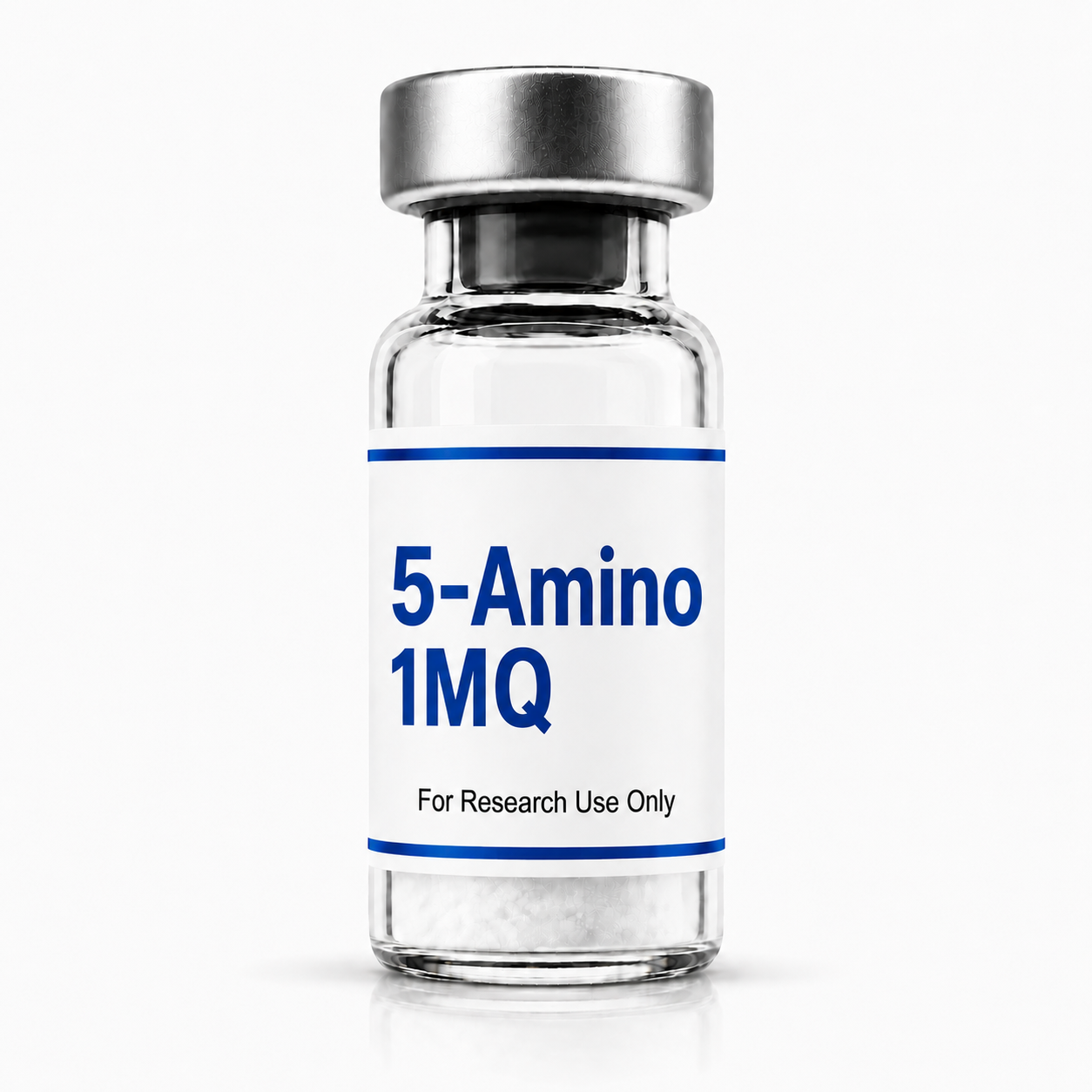
5-Amino-1MQ
Every price, divided down to the milligram.
Vendors sell this compound in different vial sizes at different prices, which makes sticker prices useless for comparison. So we divide every listing by its stated peptide content and rank what comes out.
Vendors pay us a commission when you buy through our links. It never changes the order — rows are sorted by measured price per mg, and every flag is computed from the data shown. Read the full disclosure
Ranked by $ per mg
Sprays listed after the vials, unrankedHow this page is funded: vendors listed here pay us a commission when you buy through our links. Commissions never change the ranking — rows are ordered by measured price per mg, and flags are computed from the data on this page. Sponsored placements, if any, are always labeled.
On this page
How to read these rows
Verify the COA
A certificate of analysis should come from an independent lab, reference the exact batch number on the label, and be recent. Vendor-issued documents without a named third-party lab carry less weight — the COA row links to what each vendor publishes.
Match the format
Lyophilized vials and sprays are different products with different concentrations. That is why sprays sit outside the $/mg ranking — compare vials to vials, sprays to sprays.
Count the total cost
Shipping fees, free-shipping thresholds and active discount codes can flip which vendor is actually cheapest for your order size. The $/mg figure is the baseline; the shipping and code details finish the math.
How we rank
Rows are ordered by price per mg: listed price divided by stated peptide content, excluding shipping and codes, so every vial competes on the same axis. Each row carries its own $/mg figure, so the size of the gap between vendors is visible, not just the order. Sprays follow the vials, unranked.
The best-documented testing flag goes to the vendor publishing batch-level, third-party certificates. The shipping flag goes to the fastest published delivery from a domestic warehouse. Data is re-checked on a schedule and each row carries its verification date.
Small-molecule NNMT inhibitor
NNMT inhibitor studied for boosting NAD+, mitochondrial function, and metabolic health.
A small-molecule methylquinolinium inhibitor of nicotinamide N-methyltransferase (NNMT) characterised in the primary literature as a metabolic modulator in preclinical adipocyte and hepatocyte models. For laboratory characterisation only.
5-Amino-1MQ — clinical & mechanistic profile
5-Amino-1MQ is a selective, membrane-permeable small-molecule NNMT inhibitor (EC50 ~2.3 µM in adipocytes) that blocks nicotinamide methylation to 1-MNA, preserving nicotinamide for NAD+ salvage, elevating NAD+ 1.2-1.6 fold, and activating Sirt1 for metabolic benefits including ~35% adipose reduction without appetite effects.
Studied applications
- NNMT inhibition
- selective competitive inhibition (EC50 ~2.3 µM) preserves nicotinamide for NAD+ synthesis
- NAD+ elevation
- increases cellular NAD+ 1.2-1.6 fold by shunting nicotinamide into salvage pathway
- Anti-obesity effects
- ~35% EWAT reduction, ~5.1% body weight loss in DIO mice without food intake changes
- SAM preservation
- prevents SAM depletion, maintaining methylation capacity for other cellular reactions
- Metabolic reversal
- reverses diet-induced insulin resistance via Sirt1-mediated glucose/fat metabolism
- Muscle benefits
- improved exercise capacity and reduced recovery time in aged mice via mitochondrial NAD+
Research constraints & safety notes
- Small molecule compound—NOT a peptide despite common categorization
- Exclusively preclinical—no human clinical trials conducted
- Mechanism validated only in cell culture and mouse models
- Long-term effects of chronic NNMT inhibition unknown
- Quality and purity of research compounds varies
Competitive inhibitor (in vitro)
In-vitro enzyme assays report 5-amino-1MQ as a competitive inhibitor of NNMT with respect to the S-adenosylmethionine cofactor. NNMT inhibition is described in the literature as elevating cellular NAD+ pools.
In-vitro / preclinical characterisation only — no clinical or therapeutic claim is expressed or implied. Research use only.
5-Amino-1MQ is a selective, membrane-permeable small-molecule NNMT inhibitor (EC50 ~2.3 µM in adipocytes) that blocks nicotinamide methylation to 1-MNA, preserving nicotinamide for NAD+ salvage, elevating NAD+ 1.2-1.6 fold, and activating Sirt1 for metabolic benefits including ~35% adipose reduction without appetite effects. It has a molecular formula C10H11N2O, mass 173.21 Da. Common synonyms in the literature include 5-Amino-1-Methylquinolinium, NNMT inhibitor, and 5A1MQ.
What it’s studied for
Investigation of 5-Amino-1MQ to date is primarily preclinical, with the majority of citations concentrated in animal models and in-vitro assays rather than randomized controlled human trials. Published work referencing 5-Amino-1MQ spans Adipocyte studies (in vitro): Differentiated adipocytes treated with 5-Amino-1MQ showed concentration-dependent NNMT inhibition with EC50 ~2.3 µM. Treatment reduced intracellular 1-MNA, elevated NAD+ 1.2-1.6 fold at 1-60 µM doses, increased SAM levels, and suppressed lipogenesis markers, Diet-induced obesity model (DIO mice): Systemic 5-Amino-1MQ treatment produced ~5.1% body weight loss (2.0 ± 0.6 g) and ~35% reduction in epididymal white adipose tissue (EWAT) mass. Adipocytes were smaller with reduced lipid content. Plasma cholesterol decreased. Critically, food intake was unchanged—effects were metabolic, not appetite-mediated, and Muscle and exercise studies: Aged mice treated with 5-Amino-1MQ showed improved running distance and reduced exercise recovery time, likely mediated by NAD+ elevation supporting mitochondrial function and Sirt1 activity in muscle tissue. Proposed mechanisms in the literature include Competitive NNMT inhibition: binds catalytic pocket, blocks nicotinamide → 1-MNA conversion (EC50 ~2.3 µM) and NAD+ salvage preservation: nicotinamide enters NAMPT → NMN → NAD+ pathway instead of methylation. None of this material describes therapeutic outcomes in humans, and No vendor listed here provides dosing guidance for 5-Amino-1MQ outside laboratory research.
Related research
For the full mechanistic profile, published references, and constraint notes on 5-Amino-1MQ, see the 5-Amino-1MQ research page. All references cited on that page are peer-reviewed primary literature.
For research use only. This summary is a research-scientific overview compiled from peer-reviewed sources. It is not medical advice and is not intended for human or veterinary consumption.
Receptor engagement in the primary literature
Binding and functional-assay data for 5-Amino-1MQ, from peer-reviewed in-vitro pharmacology publications. Values are receptor activity parameters — not clinical outcomes.
Investigational context
Study designs referencing this compound in the published literature. Descriptions cover framework only — phase, participant count, duration, and citation — not outcomes. Click a card to review the source directly.
Specifications
| Attribute | Value |
|---|---|
| Molecular Formula | C11H13N3O |
| Molecular Weight | 203.24 g/mol |
| Sequence length | Small molecule |
| Physical form | Lyophilized powder |
| PubChem CID | 135437526 ↗ |