Neuropeptide Compounds · Checked
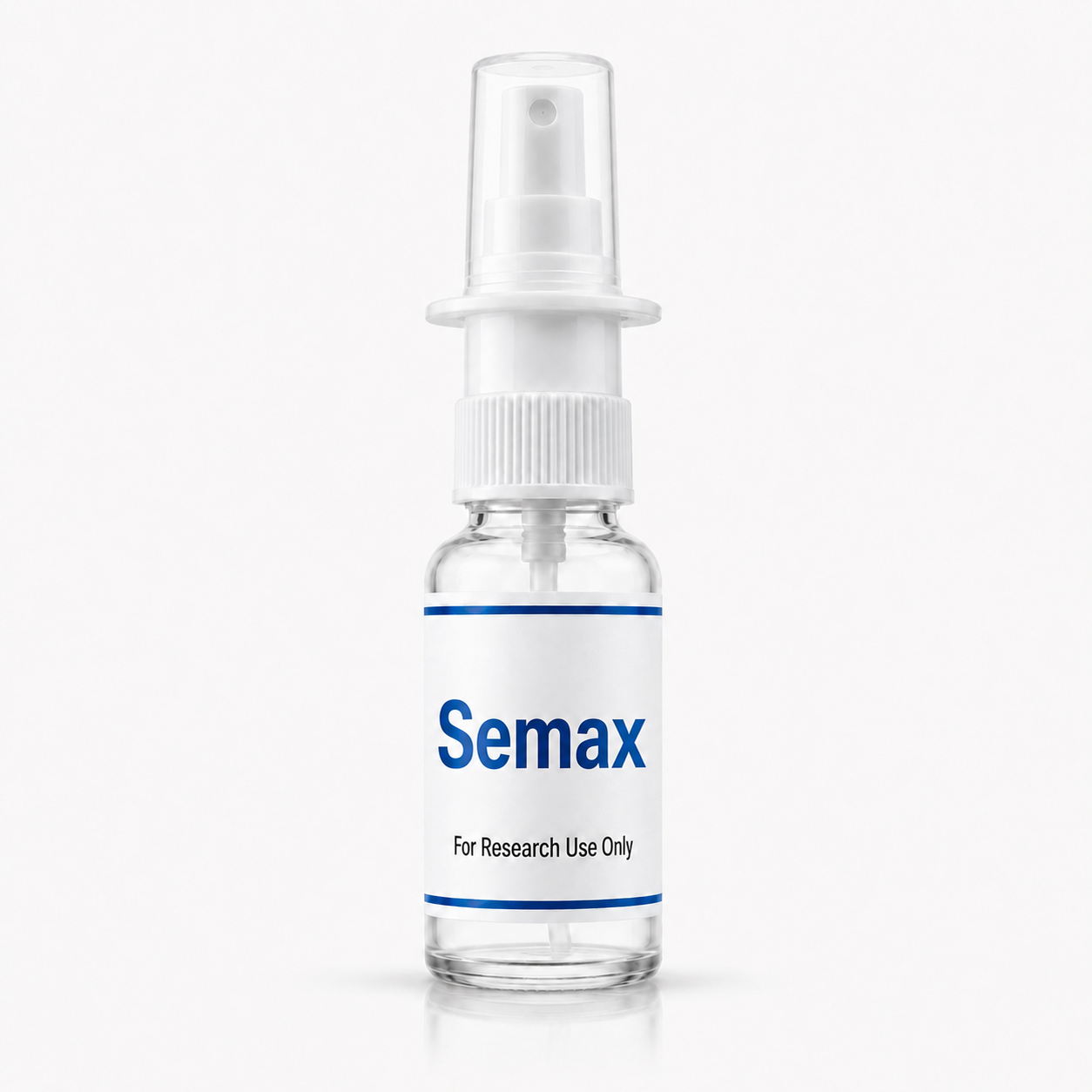
Semax Spray
Every price, divided down to the milligram.
Sticker prices hide what a compound actually costs, because vial sizes differ. So we divide the listing by its stated peptide content and show the real cost per milligram.
Vendors pay us a commission when you buy through our links. It never changes the order — rows are sorted by measured price per mg, and every flag is computed from the data shown. Read the full disclosure
Where to buy
One listing trackedHow this page is funded: vendors listed here pay us a commission when you buy through our links. Commissions never change the ranking — rows are ordered by measured price per mg, and flags are computed from the data on this page. Sponsored placements, if any, are always labeled.
On this page
How to read these rows
Verify the COA
A certificate of analysis should come from an independent lab, reference the exact batch number on the label, and be recent. Vendor-issued documents without a named third-party lab carry less weight — the COA row links to what each vendor publishes.
Match the format
Lyophilized vials and sprays are different products with different concentrations. That is why sprays sit outside the $/mg ranking — compare vials to vials, sprays to sprays.
Count the total cost
Shipping fees, free-shipping thresholds and active discount codes can flip which vendor is actually cheapest for your order size. The $/mg figure is the baseline; the shipping and code details finish the math.
How we rank
The row below carries a price per mg figure: listed price divided by stated peptide content, excluding shipping and codes. It is the same calculation applied on every compound page, so a figure here is directly comparable to one anywhere else on the site.
We currently track a single listing for this compound. When a second vendor is added the rows are ordered by measured $/mg, and the flags for testing and shipping are computed from the data shown. Each row carries its own verification date.
About Semax Spray
Synthetic ACTH-derived neuropeptide-signalling — increases BDNF, sharpens focus, and supports neuroprotection.
Semax — clinical & mechanistic profile
Semax is a synthetic heptapeptide analog of ACTH(4-10) that enhances BDNF and NGF expression, modulates dopaminergic, serotonergic, and cholinergic systems, and demonstrates neuroprotective effects through inhibition of nitric oxide synthesis, improved cerebral blood flow, and anti-inflammatory gene modulation in stroke research.
Studied applications
- BDNF upregulation
- intranasal administration increases BDNF levels in rat basal forebrain within 3 hours, supporting neuronal survival and synaptic plasticity
- Neuroprotection in ischemia
- inhibits nitric oxide synthesis, improves cerebral blood flow and oxygen delivery, reduces neuroinflammation
- Neurotransmitter modulation
- enhances dopaminergic (motivation/executive function), serotonergic (mood), and cholinergic (memory/attention) systems
- Vascular effects
- causes capillary bore extension within 15 minutes, alters genes promoting artery vasodilation within 3 hours of ischemic injury
- Anti-amyloid properties
- shows anti-aggregation properties against amyloid-beta, inhibiting fiber formation in presence of copper ions
Research constraints & safety notes
- Approved only in Russia—not FDA approved or available by prescription in Western countries
- Most research originates from Russian institutions with limited Western replication
- Short half-life requires frequent administration or intranasal delivery for CNS effects
- No completed Western clinical trials meeting FDA/EMA standards
- Effects in Western populations and with Western medications largely unstudied
Semax is a synthetic heptapeptide analog of ACTH(4-10) that enhances BDNF and NGF expression, modulates dopaminergic, serotonergic, and cholinergic systems, and demonstrates neuroprotective effects through inhibition of nitric oxide synthesis, improved cerebral blood flow, and anti-inflammatory gene modulation in stroke research. It has a molecular formula C37H51N9O10S, mass 813.93 Da. Its published amino-acid sequence is Met-Glu-His-Phe-Pro-Gly-Pro. Common synonyms in the literature include ACTH 4-7 PGP, Heptapeptide Semax, and ACTH(4-10) analog.
What it’s studied for
Investigation of Semax to date is a mix of preclinical and early clinical, with the majority of citations concentrated in animal models and in-vitro assays rather than randomized controlled human trials. Published work referencing Semax spans Stroke and ischemia research: Extensive preclinical and Russian clinical studies have examined Semax in stroke contexts. Animal studies show reduced infarct size, decreased oxidative stress, and improved cerebral blood flow. Human stroke patients in Russia reportedly show accelerated recovery with elevated plasma BDNF levels, BDNF and neurotrophic factor studies: Research demonstrates Semax rapidly elevates BDNF expression and its receptor TrkB in hippocampus, frontal cortex, and basal forebrain within 3-8 hours post-dose. Nerve growth factor (NGF) is also upregulated, supporting neuronal survival and synaptic plasticity, and Alzheimer's disease models: In APP/PS1 transgenic mice, Semax improved cognition in novel object recognition and Barnes maze tests, reduced amyloid plaques and inclusions in cortex and hippocampus, and showed neuroprotective effects. Proposed mechanisms in the literature include BDNF/NGF pathway: rapidly upregulates BDNF and NGF expression supporting neuronal survival and neurogenesis and Neurotransmitter enhancement: modulates dopaminergic (motivation), serotonergic (mood), and cholinergic (memory) activity. None of this material describes therapeutic outcomes in humans, and No vendor listed here provides dosing guidance for Semax outside laboratory research.
Related research
For the full mechanistic profile, published references, and constraint notes on Semax, see the Semax research page. All references cited on that page are peer-reviewed primary literature.
For research use only. This summary is a research-scientific overview compiled from peer-reviewed sources. It is not medical advice and is not intended for human or veterinary consumption.
Specifications
| Attribute | Value |
|---|---|
| Sequence | Met-Glu-His-Phe-Pro-Gly-Pro |
| CAS Number | 80714-61-0 |
| Molecular weight | 813.93 g/mol |
| Molecular formula | C37H51N9O10S |