Neuropeptide Compounds · Checked
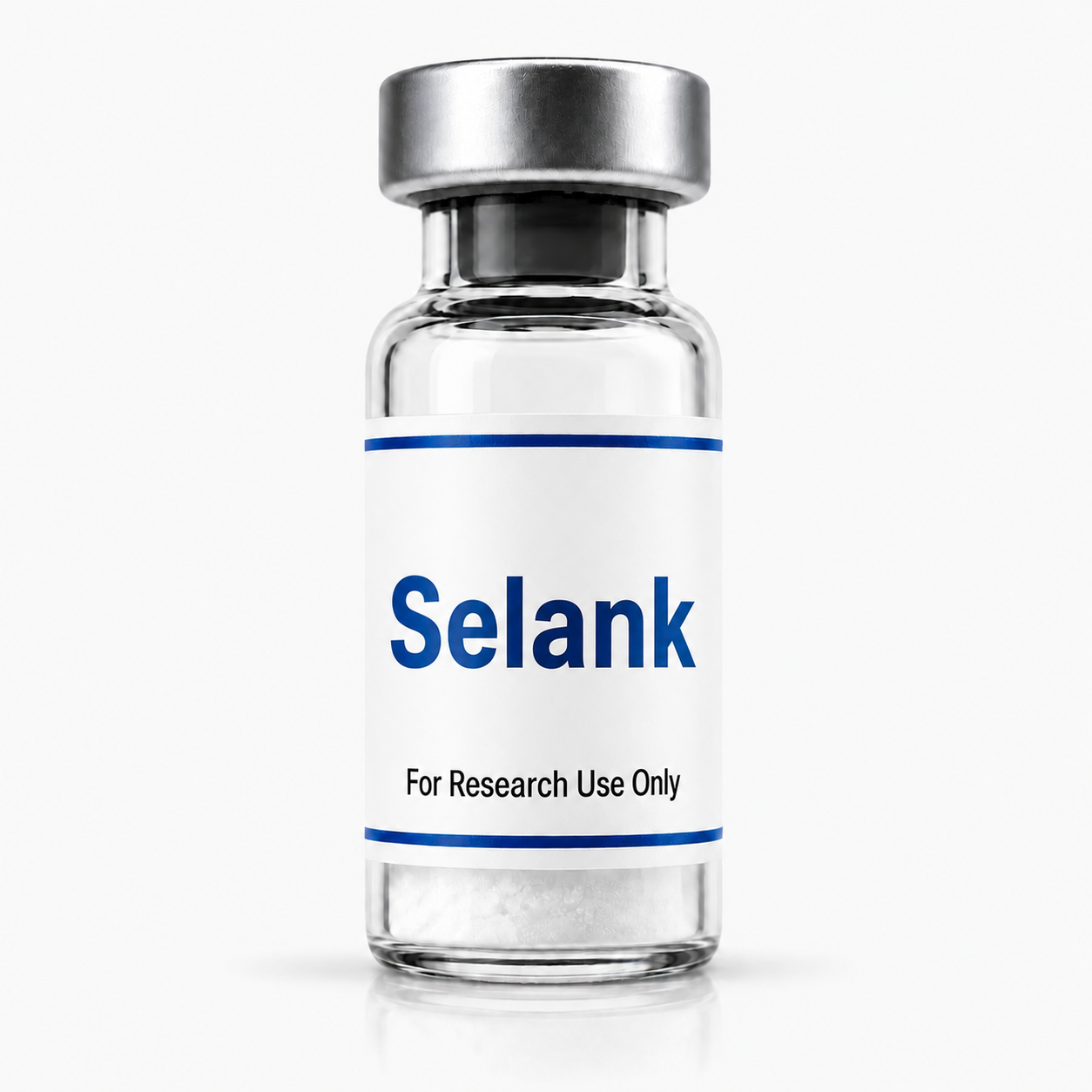
Selank
Every price, divided down to the milligram.
Vendors sell this compound in different vial sizes at different prices, which makes sticker prices useless for comparison. So we divide every listing by its stated peptide content and rank what comes out.
Vendors pay us a commission when you buy through our links. It never changes the order — rows are sorted by measured price per mg, and every flag is computed from the data shown. Read the full disclosure
Ranked by $ per mg
Sprays listed after the vials, unrankedHow this page is funded: vendors listed here pay us a commission when you buy through our links. Commissions never change the ranking — rows are ordered by measured price per mg, and flags are computed from the data on this page. Sponsored placements, if any, are always labeled.
On this page
How to read these rows
Verify the COA
A certificate of analysis should come from an independent lab, reference the exact batch number on the label, and be recent. Vendor-issued documents without a named third-party lab carry less weight — the COA row links to what each vendor publishes.
Match the format
Lyophilized vials and sprays are different products with different concentrations. That is why sprays sit outside the $/mg ranking — compare vials to vials, sprays to sprays.
Count the total cost
Shipping fees, free-shipping thresholds and active discount codes can flip which vendor is actually cheapest for your order size. The $/mg figure is the baseline; the shipping and code details finish the math.
How we rank
Rows are ordered by price per mg: listed price divided by stated peptide content, excluding shipping and codes, so every vial competes on the same axis. Each row carries its own $/mg figure, so the size of the gap between vendors is visible, not just the order. Sprays follow the vials, unranked.
The best-documented testing flag goes to the vendor publishing batch-level, third-party certificates. The shipping flag goes to the fastest published delivery from a domestic warehouse. Data is re-checked on a schedule and each row carries its verification date.
About Selank
Anxiolytic and neuropeptide research compound — benzodiazepine-equivalent calm without sedation or dependency.
Selank — clinical & mechanistic profile
Selank is a synthetic heptapeptide analog of tuftsin with additional glyproline residues, developed in Russia and investigated for anxiolytic, neuropeptide-signalling, neuroprotective, and immunomodulatory effects through GABAergic and neurotransmitter system modulation.
Studied applications
- Anxiolytic effects
- demonstrates activity comparable to low-dose benzodiazepines without sedation or dependence
- GABAergic modulation
- allosterically affects GABA-A receptors, increasing GABA binding affinity
- Neuropeptide-Signalling research
- studied for neuropeptide signalling, memory, and attention effects
- Immunomodulation
- influences IL-6 expression, T helper cell balance, and enkephalin stabilization as tuftsin analog
- BDNF elevation
- rapidly increases brain-derived neurotrophic factor in hippocampus
Research constraints & safety notes
- Approved only in Russia—not FDA approved or available by prescription in Western countries
- Limited Western clinical data—most research from Russian institutions
- Intranasal administration primarily studied—other routes less characterized
- Long-term safety data limited even in approved jurisdiction
- Independent replication of findings in Western laboratories is sparse
Selank is a synthetic heptapeptide analog of tuftsin with additional glyproline residues, developed in Russia and investigated for anxiolytic, neuropeptide-signalling, neuroprotective, and immunomodulatory effects through GABAergic and neurotransmitter system modulation. It has a molecular formula C33H57N11O9, mass 751.88 Da. Its published amino-acid sequence is Thr-Lys-Pro-Arg-Pro-Gly-Pro. Common synonyms in the literature include Selanc, TP-7, and Selanc peptide.
What it’s studied for
Investigation of Selank to date is a mix of preclinical and early clinical, with the majority of citations concentrated in animal models and in-vitro assays rather than randomized controlled human trials. Published work referencing Selank spans GABA mechanism studies: Selank acts as a positive allosteric modulator of GABA_A receptors, enhancing [3H]GABA binding in concentration-dependent, subtype-selective manner without cumulative effects when combined with benzodiazepines like diazepam. It blocks modulatory activity of diazepam and olanzapine, suggesting distinct binding sites. Gene expression shows positive correlation to GABA effects at 1 hour (r=0.86, p≤0.05), Human clinical studies (Russia): Clinical trials in patients with generalized anxiety disorder have demonstrated anxiolytic efficacy comparable to low-dose benzodiazepines (diazepam, medazepam, phenazepam). Studies report reduced anxiety without hypnosedative effects or withdrawal symptoms, and Ethanol withdrawal models: Selank (0.3 mg/kg IP) reduces anxiety in elevated plus maze and social interaction tests during ethanol withdrawal. In combination with chronic mild stress, standalone Selank (300 μg/kg intranasal) is most effective for elevated anxiety. Proposed mechanisms in the literature include GABA-A receptor allosteric modulation: increases GABA binding affinity, mimicking benzodiazepine-like actions without side effects and Enkephalin system: inhibits enkephalin-degrading enzymes, increasing leu-enkephalin half-life. None of this material describes therapeutic outcomes in humans, and No vendor listed here provides dosing guidance for Selank outside laboratory research.
Related research
For the full mechanistic profile, published references, and constraint notes on Selank, see the Selank research page. All references cited on that page are peer-reviewed primary literature.
For research use only. This summary is a research-scientific overview compiled from peer-reviewed sources. It is not medical advice and is not intended for human or veterinary consumption.
Specifications
| Attribute | Value |
|---|---|
| Sequence | Thr-Lys-Pro-Arg-Pro-Gly-Pro |
| CAS Number | 129954-34-3 |
| Molecular weight | 751.88 g/mol |
| Molecular formula | C33H57N11O9 |